Best overall for durability in 2026: copper. Best for a long-lasting alternative: zinc. Best for most homeowners balancing durability and cost: aluminum. Best budget option: vinyl, though its weathering makes it the weakest long-term pick. This guide ranks gutter materials by how they handle corrosion, physical damage, maintenance and installation demands—not by an unsourced lifespan claim.
- Best gutter materials ranked by durability in 2026: copper leads; aluminum is the practical default for most homes.
- Zinc offers strong corrosion resistance but calls for an installer experienced with the material.
- Galvanized steel resists dents but needs its protective coating maintained; vinyl is the weakest long-term choice.
- Campbell's Precision Roofing can assess gutters alongside roof drainage and documented storm damage.
Why this matters
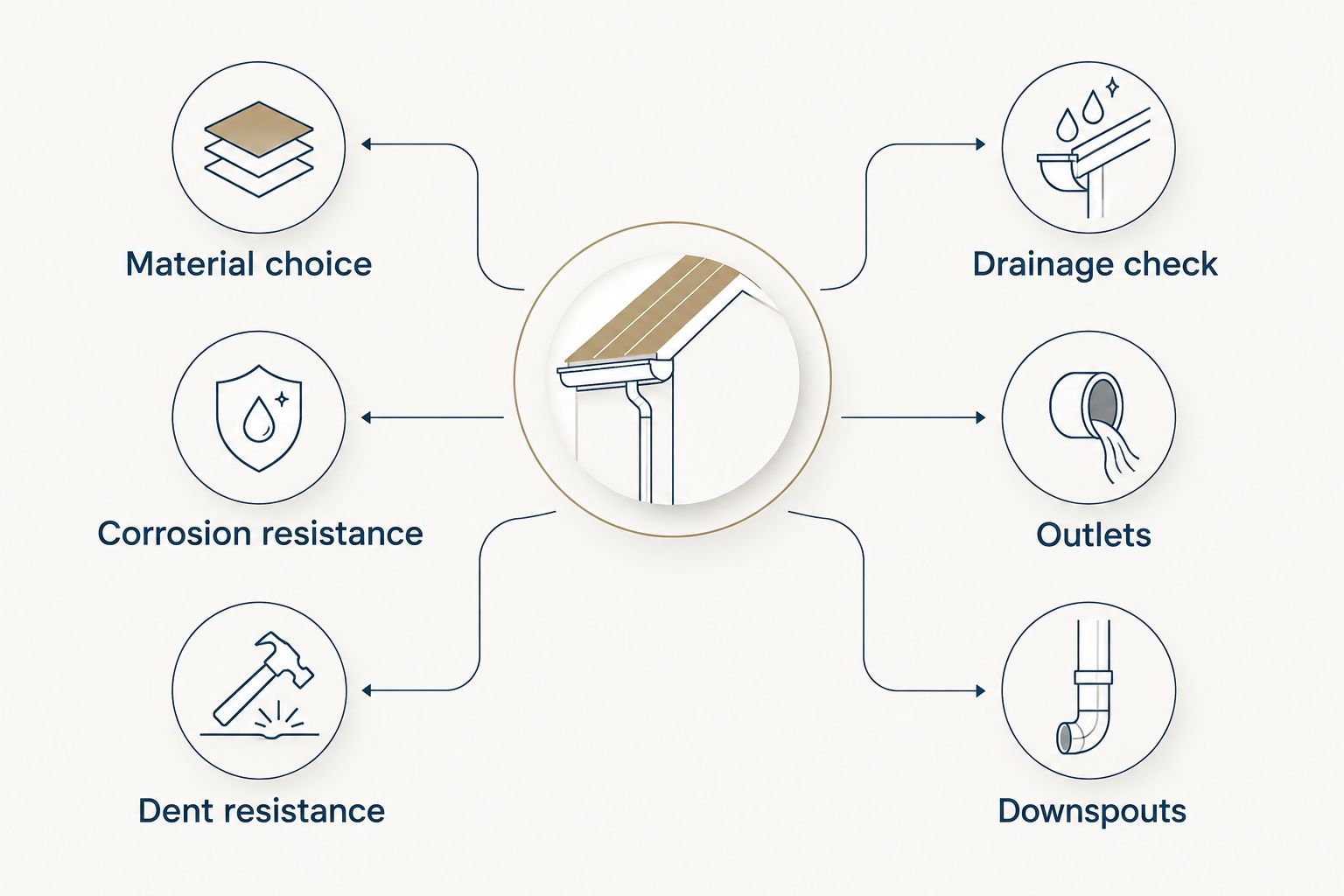
A gutter can look intact from the yard and still send water behind the fascia or over its front edge. Material matters, but it is only part of the decision: pitch, supports, seams, outlets and downspouts determine whether water leaves the roof edge as intended. If you are planning a roof replacement or addressing storm damage, ask for the gutter and roof edge to be assessed together.
Campbell's Precision Roofing serves homeowners in Denver, NC and the greater Lake Norman and Charlotte area. The company is a GAF Master Elite and President's Club roofing contractor, with GAF contractor ID 1114013 and NC license #101889. Those roofing credentials do not establish that every gutter material in this ranking is available for your project; confirm the proposed material and scope in the estimate.
Copper ranks first for material durability, but aluminum is the default recommendation for most homeowners in 2026. Copper's resistance to rust is useful when longevity is the priority. Aluminum also resists rust and is easier to justify when you need dependable drainage without committing to a specialty-metal installation. Neither material fixes poor sizing or a badly placed downspout.
What makes the best gutter material?
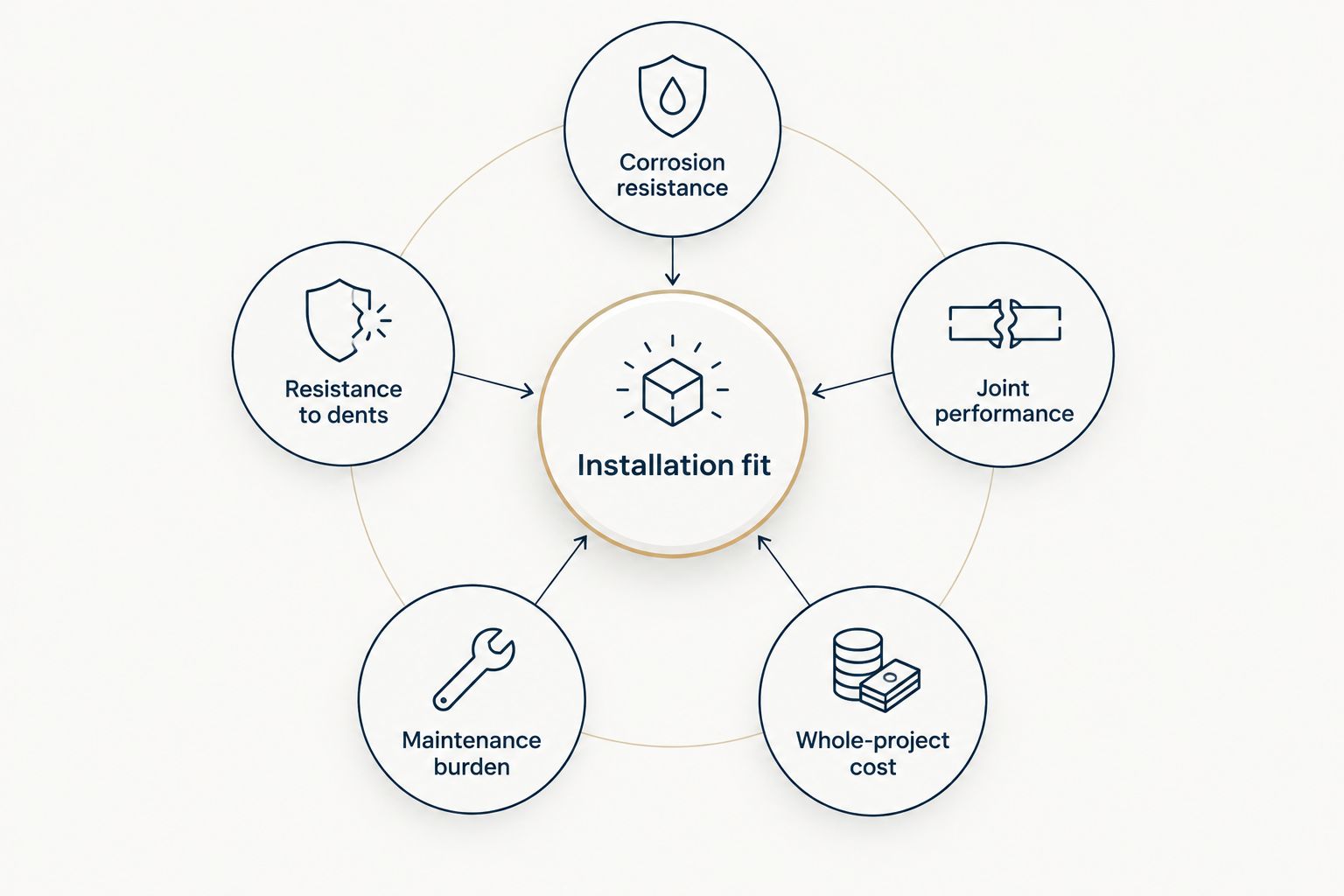
Use these criteria before comparing finishes or accepting a material recommendation:
- Corrosion resistance: Gutters stay wet and collect debris. Look at what happens where water sits, coatings wear or unlike metals touch.
- Resistance to dents and movement: Branches, ladders, temperature changes and loose supports put different stresses on different materials.
- Joint and seam performance: Corners, outlets and connections need sound installation regardless of the metal or plastic used.
- Maintenance burden: A durable material still needs debris removed and drainage checked. Some materials also depend on an intact protective coating.
- Installation fit: Not every crew works with every material. Ask how the proposed system will attach to the existing fascia and connect to downspouts.
- Whole-project cost: Compare written scopes, not material labels alone. Include removal, supports, outlets, downspouts and any roof-edge or fascia work in the estimate.
Do not choose a material before checking drainage capacity. Common residential discussions include 5-inch and 6-inch gutters, with 3-by-4-inch downspouts among the available configurations. Those dimensions are not a sizing prescription. Roof area, slope, outlet placement and where water can discharge determine what belongs on your house.
Gutter materials at a glance
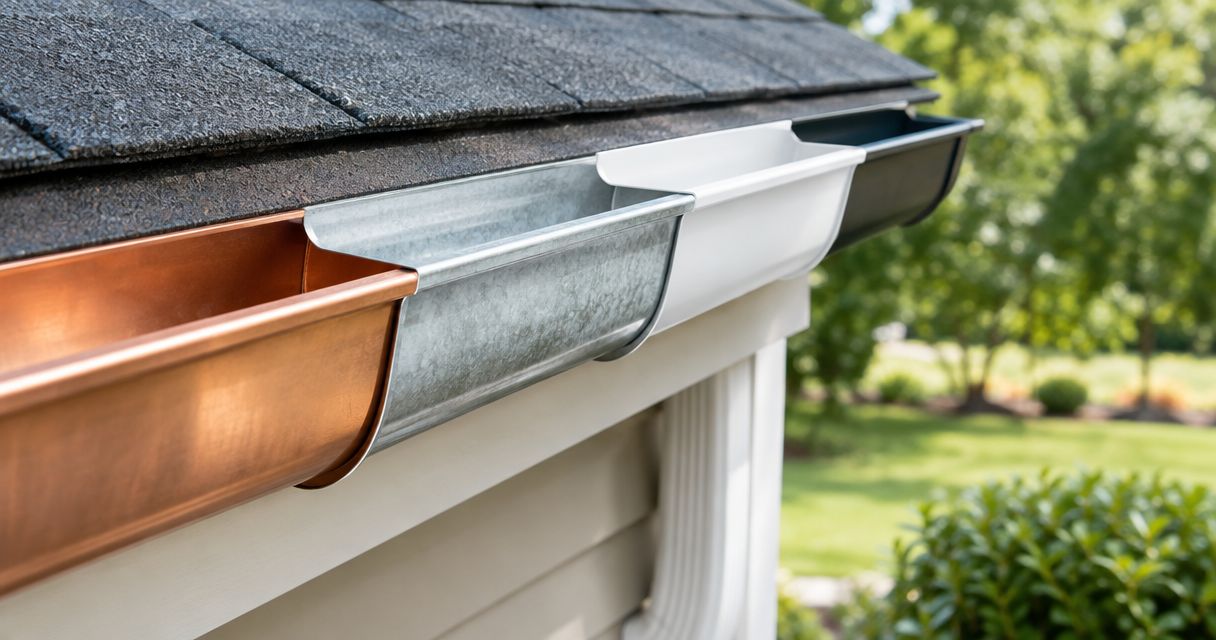
This is a durability ranking, not a claim that the first material is right for every budget or roof. The limitations column is just as important as the ranking.
| Rank and material | Best for | Standout feature | Key limitation |
|---|---|---|---|
| 1. Copper | Homeowners prioritizing long-term material durability | Resists rust without a protective coating | Specialty installation and connections need careful planning |
| 2. Zinc | Homeowners considering a specialty metal | Develops a protective patina | Requires material-specific installation experience |
| 3. Aluminum | Most residential gutter replacements | Resists rust and suits a practical replacement scope | Dents more readily than steel |
| 4. Galvanized steel | Locations where dent resistance matters | Rigid metal construction | Rust risk increases when the protective coating fails |
| 5. Vinyl | A limited-scope choice where initial outlay leads the decision | Does not rust | Temperature movement and weathering work against long-term durability |
The table separates resistance to corrosion from resistance to dents. Steel can be the better answer to a particular impact concern without becoming the best all-around material. Likewise, copper's top durability rank does not make it the automatic recommendation when the main problem is an undersized outlet or failing fascia.
Before you choose from the table
Ask the installer to identify the failure they are solving. Water behind the gutter points toward a roof-edge, flashing or attachment issue; water spilling over the front calls for a drainage review. A material swap alone does not diagnose either condition. Check the proposed gutter profile, outlets, downspouts and discharge locations in the same conversation.
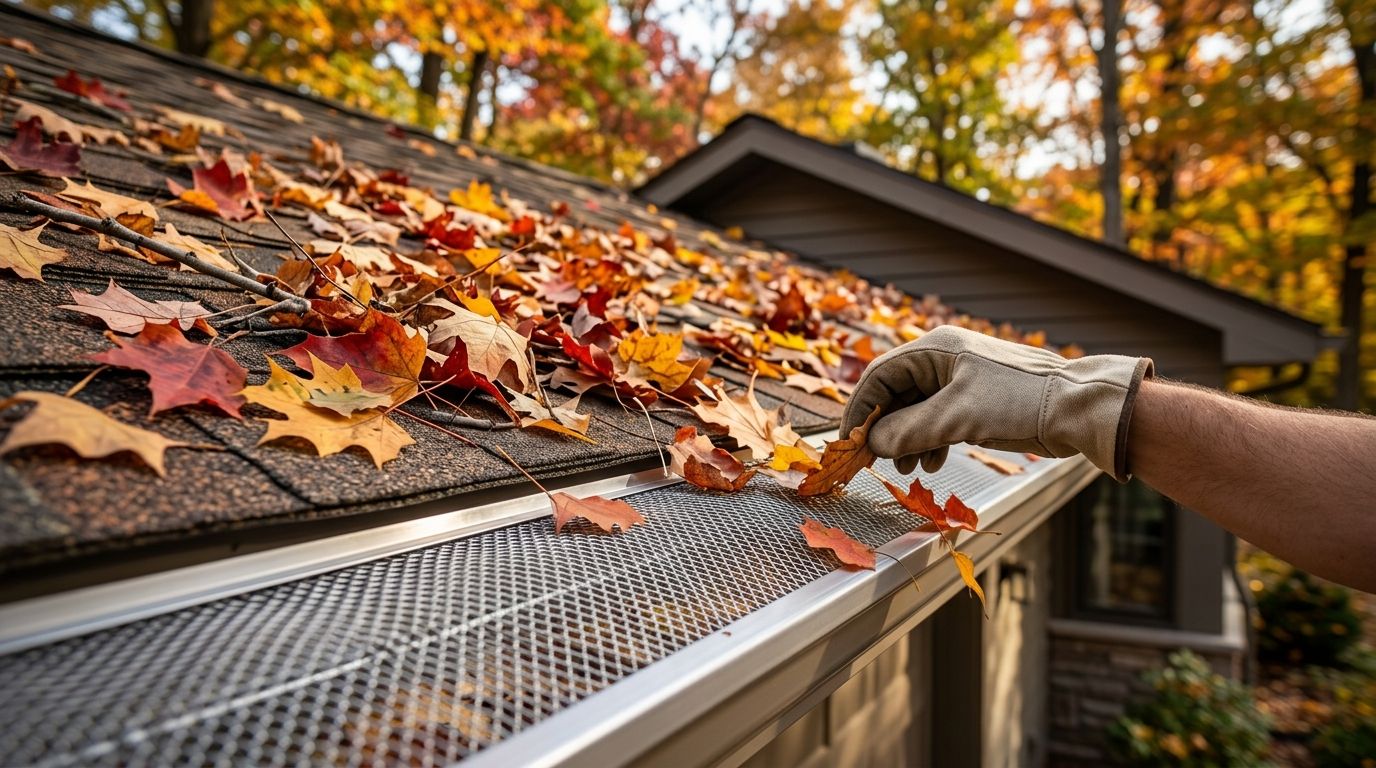
For homes with heavy tree cover, debris control deserves a separate decision from material choice. Compare access for cleaning and the effect of guards on maintenance in this gutter guard guide for heavy tree cover. No guard removes the need to inspect the drainage path.
1. Copper: best gutter material for maximum durability
Copper is a metal gutter material that resists rust and develops a patina as its surface ages. It leads this 2026 ranking for homeowners who put material longevity ahead of a simple replacement specification. The trade-off is that the installer must plan the full assembly, including fasteners, joints and contact with other materials.
Copper pros:
- Resists rust without depending on a painted or galvanized coating.
- Develops a surface patina rather than needing to retain its original bright appearance.
- Suits a project where the homeowner is deliberately choosing a long-term specialty metal.
Copper cons:
- Requires attention to connections with dissimilar metals, which can create corrosion problems.
- Its changing appearance will not suit a homeowner who wants a fixed metal color.
- Material selection does not correct bad pitch, blocked outlets or weak fascia.
Best for: A homeowner who values long-term material durability and has an installer prepared to detail the entire copper system.
Verdict: Buy copper when the written scope specifies compatible components, sound attachment and a drainage plan. Do not select it on material reputation alone. Ask who will handle the joints and how water will move from the gutter to its discharge point.
2. Zinc: best gutter material for a specialty-metal alternative
Zinc forms a protective patina, which is why it belongs near the top of a durability ranking. It is a distinct choice from copper: the installation details and the crew's familiarity with the material deserve close attention. In 2026, choose zinc only after confirming that the proposed installer works with it.
Zinc pros:
- Resists corrosion through its developing patina.
- Offers a long-term metal option that does not rely on a painted finish for its basic appearance.
- Gives homeowners another specialty-metal option when comparing complete gutter specifications.
Zinc cons:
- Installation details matter; do not assume a crew that installs aluminum routinely uses the same methods for zinc.
- The patina changes the look over time, so a sample does not show a permanently fixed appearance.
- Availability of a qualified installer must be confirmed before treating zinc as a practical choice.
Best for: A homeowner set on a specialty-metal system who can review a material-specific installation proposal.
Verdict: Hold until the installer identifies the proposed components and explains the installation details. A material's resistance to corrosion cannot make up for unsuitable joints or supports.
3. Aluminum: best gutter material for most homeowners
Aluminum resists rust and is a practical starting point for a residential gutter replacement. It places below copper and zinc on this durability-first list because it can dent, not because it is a poor default. For most homeowners comparing durability and project scope in 2026, aluminum is the material to assess first.
Aluminum pros:
- Resists rust, including where a painted finish is damaged.
- Works as a straightforward material choice when the main goal is reliable roof drainage.
- Lets the estimate focus on installation essentials such as pitch, outlets, supports and downspouts.
Aluminum cons:
- Can dent from impacts or ladder contact.
- Its finish can be scratched or wear without the underlying metal rusting.
- Contact with incompatible materials still calls for proper detailing.
Best for: A homeowner replacing worn gutters who wants a rust-resistant material without making specialty metal the center of the project.
Verdict: Buy aluminum when the installer has checked capacity and attachment rather than simply matching the old gutter. Ask where water will go at each downspout. If the existing gutter overflows, copying its dimensions without reviewing the drainage layout repeats the problem.
4. Galvanized steel: best gutter material when dents are the concern
Galvanized steel uses a protective zinc coating to limit rust. Its stiffness makes it worth considering where dent resistance matters more than low-maintenance corrosion resistance. That strength has a condition: cut edges, scratches and aging coatings require attention.
Galvanized steel pros:
- Resists dents better than aluminum in comparable use.
- Provides a rigid gutter option for a homeowner concerned about physical contact.
- Gives an installer another material to assess when the location puts the gutter at risk of impact.
Galvanized steel cons:
- Can rust where the protective coating is compromised.
- Needs inspection of vulnerable edges, joints and worn areas over time.
- Greater rigidity does not prevent leaks at poorly made connections.
Best for: A homeowner with a specific dent-resistance concern who accepts the coating's maintenance implications.
Verdict: Hold until the estimate explains how edges and connections will be protected. If the reason for replacement is corrosion, make the installer explain why galvanized steel solves that problem better for your house than aluminum.
5. Vinyl: best gutter material for a limited-scope project
Vinyl does not rust. It also expands and contracts with temperature changes and can weather under sun exposure, making it the last choice in a durability-first ranking. Treat it as a narrower project option, not as a substitute for an assessment of roof drainage.
Vinyl pros:
- Does not develop metal rust.
- Provides a nonmetal option when that is an explicit project requirement.
- Can be considered for a limited-scope installation where the homeowner accepts its trade-offs.
Vinyl cons:
- Temperature movement puts demands on joints and supports.
- Weathering and physical damage make it a weak long-term durability pick.
- Its lack of rust resistance problems does not address overflow or drainage design.
Best for: A homeowner making a limited-scope choice with clear expectations about maintenance and replacement.
Verdict: Skip vinyl if your priority is long-term durability. If you still consider it, ask how joints will accommodate movement and how the gutter will be supported.
How we ranked gutter materials
The 2026 order weighs corrosion resistance first, then physical damage, maintenance demands and installation complexity. That makes copper and zinc strong material-durability picks, while aluminum wins the practical recommendation for most homes. Galvanized steel moves up if dents are your defining concern; vinyl moves down when long-term weathering matters.
This ranking does not assign a lifespan or a local installation price to any material. Neither figure is established by the inputs for your house. Compare written scopes that name the material, gutter and downspout configuration, attachment method, disposal work and any fascia or roof-edge repairs. An estimate that leaves those items unclear is not ready for a material-only comparison.
For homeowners dealing with a leak as well as failing gutters, separate the diagnoses. The guide to fixing a roof leak without replacing the whole roof addresses the roof question; a gutter inspection must still establish whether water is escaping at an outlet, seam, roof edge or downspout.
Which gutter material should you choose?
Choose aluminum as the default in 2026. It resists rust and keeps the decision focused on a correctly installed drainage system. Choose copper when material durability is your leading priority and the installer can specify compatible components. Consider zinc only with a material-specific installation plan, and galvanized steel when dent resistance is the problem you need to solve. Do not choose vinyl for a durability-first replacement.
If storm damage prompted the project, ask for photographs of the gutter, fascia and roof edge before agreeing to the scope. Campbell's Precision Roofing offers storm and hail inspections and insurance-claim assistance for homeowners in its Denver and greater Lake Norman and Charlotte service area. Documented damage, policy terms and the insurer determine a claim outcome; an inspection does not guarantee approval or payment.
FAQ
What is the most durable gutter material in 2026?
Copper ranks first in this 2026 material-durability comparison because it resists rust without a protective coating. The installed gutter still needs sound joints, supports and drainage.
What is the best gutter material for most homes?
Aluminum is the best starting point for most homeowners comparing durability and project scope. It resists rust, but it can dent, and the gutter must still be sized and installed correctly.
Is copper better than aluminum for gutters?
Copper leads aluminum when long-term material durability is the priority. Aluminum is the practical default when you want rust resistance without making specialty-metal installation the focus.
Is zinc a good material for gutters?
Zinc is a strong corrosion-resistant gutter material that develops a protective patina. Confirm the installer has a material-specific plan for its joints, supports and connections.
Do galvanized steel gutters rust?
Galvanized steel gutters can rust when their protective coating is damaged or wears away. Inspect cut edges, joints and scratched areas as part of ongoing maintenance.
Are vinyl gutters durable enough for a long-term replacement?
Vinyl is the weakest long-term pick in this durability-first ranking. It does not rust, but temperature movement and weathering make its joints and supports important concerns.
Should I choose 5-inch or 6-inch gutters?
Choose gutter dimensions after an installer reviews your roof drainage, outlets and downspouts. A 5-inch or 6-inch label alone does not establish which configuration will carry water away from your house.
One last thing
The most durable gutter material is not the best fix for the wrong failure. Before approving a 2026 replacement, ask the installer to show you where water enters, where it escapes and where each downspout discharges. Campbell's Precision Roofing can assess gutter work alongside roof repairs, roof replacement and storm-damage documentation; get the findings and proposed scope in writing before choosing a metal.